Showing posts with label Philosophy. Show all posts

Wednesday, 18 April 2007

Jade Goodey for prime minister?

To make my first point on democracy, consider the fate of the Godfather of philosophers and Glass Bead Gamers, Socrates.

Socrates was tried in Athens in 399 BC- Athens- the epicentre of ancient Greece and home of democracy. Socrates came to the attention of the elders of ancient Greece because he was strange- he looked strange (squat and snub-nosed), and had the irritating habit of walking barefoot through the streets of Athens, stopping complete strangers, and asking them questions: What did they consider beautiful? Could they define art? What was bravery? And so on. This method of Socratic dialectic is still at the root of much modern philosophical thought and logic. Socrates was a hugely virtuous, creative and intelligent thinker. He lived simply- eschewing wealth and position- and sought only knowledge, wisdom and truth, inspiring a whole generation of Greek thinkers, notably Plato, and an entire tradition of Western Philosophy.

Socrates once visited the famous Oracle at Delphi, renowned for her wisdom. He asked her, ‘who is the wisest man in Athens?’, and not recognising him, she replied ‘Socrates’. Now Socrates knew this was not true, as he recognised fully his own failings. He therefore concluded that true intelligence comes from recognising your own ignorance.

The elders of Athens grew suspicious of Socrates and put him on trial. Athens was the greatest city in the world, and had high social conventions- one in 3 members of the populace were slaves, women were prevented from political or public life, social roles were highly structured. Socrates made enemies through questioning some of these conventions, not maliciously, but merely enquiring whether the BELIEFS Athenians had come to accept were routed in TRUTH or CONVENTION? Three powerful citizens petitioned for him to be tried on the basis that he had disrespected the city’s Gods, and was corrupting the young.

Enter Athenian democracy: The court of the Heliasts was a large wooden building with benches for the jury and platforms for defence and prosecution. A jury of between 200 and 2,500 people would decide on verdicts by a show of hands. This was a mirror of Athenian custom as a whole- 2 or 3 times a month, all male citizens were invited to gather to vote on important questions by a show of hands. However, in an echo of our own times, there were flaws- not everyone could be bothered to turn out, so decisions were often made by a skewed subset.

Some 500 citizens were in the jury on the day of Socrates trial, however they were not experts in any sense: They included an unusual number of the old and war wounded, who were motivated by the payment for going, rather than any sense of justice. Socrates answered his charges honestly and eloquently. Why would he try and corrupt the citizens of Athens, he asked? Since a corrupt Athens would only do harm to him- an Athenian citizen. When the initial guilty vote didn’t carry the requisite margin, the court read out an attack on Socrates penned by one of his condemners- equivalent to reading out an article from the News of the World and presenting it as objective evidence. The second vote him guilty and Socrates was sentenced to death. He drank his famous cup of Hemlock, despite having the option at any time to admit his ‘crimes’ and go free. He chose truth over popularity, conviction over the easy road.

Herein lies the first flaw of democracy- allowing ‘the people’ to choose their government, or decide the guilt/innocence of their peers relies on ‘the people’ being open-minded and wise. Otherwise they will make judgments based on ignorance, or no judgements at all. Consider the huge drop in people voting at general elections, despite the fact that we are hugely fortunate to have the freedom to vote at all. ‘Voter apathy’ is often blamed on political parties- they have become so bland and superficial that voters can’t tell the difference/don’t care. But some of the blame has to lie with the electorate themselves- if they were interested enough in political issues, they would care enough to vote, but they don’t. Similarly, the tabloid press may be salacious in their editorial content, but no one forces the populace to go out and buy 3 million copies of The Sun every day. The tabloids are a reflection of their readership- of what people want to believe. As uncomfortable as this may be, we largely get the media we deserve, and we get the democracy we deserve. New Labour’s shift to bland, conviction-less psycho-babble was a calculated move to stay in power for as long as possible- for it reflected the growing state of the electorate. Unforgivable though their shallowness in enhancing this has been, we the people have nevertheless allowed our dumbed-down apathy to accommodate such a government, and thus have to take a major share of the blame.

What are the implications for society if this continues? Do we really wish to allow an increasingly flaccid western society to make key decisions such as who rules, and who is guilty or innocent? Put yourself in Socrates position- would you really want be tried by your peers? The table opposite shows the top UK search terms on Google in the first quarter of this year- a sad indictment of what is really important to people’s every day lives. When the News Of the World ran their famous campaign outing paedophiles, several people were wrongly attacked due to mistaken identity, and a paediatrician(!) was beaten up on the South coast. Such incidents of mob justice show the danger of granting un-fettered democracy to a shallow and ignorant populace- a triumph of popularity over truth, echoing Socrates time.

Jade Goodey for prime minister? Shilpa Shetty for Chancellor? Pass me the Hemlock


Friday, 16 March 2007

Art- good? Bad? Or useless?

“All art is at once surface and symbol. Those who go beneath the surface do so at their peril. …..it is the spectator, and not life, that art really mirrors” Oscar Wilde, the picture of Dorian Grey
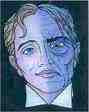
Oscar Wilde’s the picture of Dorian Grey is a joy to read. The famous story of a beautiful dandy, who never grows old, whilst a portrait of him locked in his attic reflects the sin and destruction he wreaks. However the preface to the book, a mere page and a half of unfettered Wilde commenting on art, is in itself a jewel. Not only does this set some of the key themes for the book, but Wilde exposes, in joyfully nonchalant fashion, some of the key elements of our relationship with art. Because art is beautiful we tend to imbue it with undue meaning. Art has the power to move us, therefore sometimes make the erroneous conclusion that art (and indeed artists) must have some intrinsic moral worth. “There is no such thing as a moral or an immoral book. Books are well written, or badly written, that is all.”

Because Mozart’s music is so beautiful it is somehow ‘good’, and Mozart must be a good/virtuous person to have created such beauty. We make the same mistake about people- how often to we assume that a good looking person has more intrinsic qualities- leadership, confidence, ability- than an ugly person? According to psychological studies, all the time: Studies show attractive students get more attention and higher evaluations from their teachers, good-looking patients get more personalized care from their doctors, and handsome criminals receive lighter sentences than less attractive convicts. A London Guildhall University survey of 11,000 33-year-olds found that unattractive men earned 15 percent less than those deemed attractive, while plain women earned 11 percent less than their prettier counterparts. "Good-looking men and women are generally judged to be more talented, kind, honest and intelligent than their less attractive counterparts," writes Dr Gordon Patzer, who has spent 3 decades studying physical appearance and its impacts.

Wilde’s book in part plays on this error- the young and beautiful Dorian captivates those around him, which allows him to lead a debased and destructive life, recorded in the satyrisation of his portrait. Anthony Burgess drew on similar irony in a Clockwork Orange, where Alex’s love of Beethoven coexists with his acts of ultra-violence. Nabakov’s ‘hero’ of Lolita is an extremely handsome and intelligent man, whilst at the same time being a paedophile.

In fact art, and by implication beauty, are amoral. Plenty of great artists were, and are, terrible human beings- Richard Wagner’s anti-Semitism; Philip Larkin’s predilection for pornography; the novelist Arthur Koestler, recently denounced as a rapist; the great painter Modigliani's drunken rages and the suicide of his lover and child. And the great human gift to create can be used for startlingly destructive purposes. Graham Greene’s short story ‘the destructors’ recounts how a group of bored teenagers imprison an old man, and systematically deconstruct his house until it is an empty shell. The organisation of effort, precision and artistry with which they go about their task is every bit as creative as if they were constructing a new building, sculpture or monument. In a stroke of stark irony, their ringleader, nicknamed ‘T’, is the son of failed architect. A study of how the Nazis approached the construction and planning of Auschwitz reveals terrifying creativity and ingenuity- used for despicable means.

‘Creative destruction’, in this sense is not an oxy-moron, as to create and destroy are actually symbiotic. How are we to make sense, therefore, of this co-existence of opposing forces?


The Dorian Grey story is also one of superficiality in many senses- Dorian has unending beauty, with none of the struggle necessary to achieve it- and almost as a reaction to this, an inner evil corrupts and destroy him, reflected in the painting. The duality of the story has many precedents- perhaps most notably the Faust story- where a doctor sells his soul to the devil in order to achieve greatness and everlasting life. There is no short cut though, and destruction and unfulfillment follow. The Faust story is believed to have originated in medieval German mythology- It received many literary treatments, the most famous of which was that by Johan Wolfgang von Goethe. Goethe’s 19th century version is an important departure however- it follows the standard story with one key difference: Faustus is not condemned to damnation, but rather achieves salvation at he last minute, through relating the temptations and struggles of the devil as part of his place in the world and in nature. Faust comments about Mephistopheles, the devil, “ though which art evil yet does forever good”. There is an important message here- that evil, if viewed as part of life’s struggle, can help us to overcome and progress as opposed to being something we should just avoid- “Whoever strives in ceaseless toil, him we may grant redemption".

Frederick Nietzsche, a patron saint of Glass Bead Gamers recognised this view of evil as a struggle in the ancient Greeks, whose Dionysiac festivals allowed lust and darkness an expression, but in an environment where they could be controlled. They ‘granted to evil and suspicious a moderate discharge’ therefore seeking to REGULATE darkness rather than DESTROY it. (Alain de Botton’s fabulous ‘the consolations of philosophy’ lays out Nietzsche’s views with great clarity).

Nietzsche went further, his love of gardening providing a perfect analogy: At their roots, plants can look ugly and strange, and below ground a terrible and destructive battle rages as the roots seek to establish themselves and fight for existence. But this ultimately leads to fruit and beautiful flowers above ground.

Therefore we should not expect beauty and creation, two of the fundamentals behind art, to be without huge tempestuous difficulties and destructive forces- these are NECESSARY, and an embodiment of art itself. Any number of great artists and their struggles to live, battle weakness and darkness, yet create beauty, bear testament to this. The creation of the universe itself bears witness- order through chaos, beauty through destructive forces, evolution through seismic change. Or from a theistic perspective, God’s creation of the world involved war in heaven.

Therefore we should accept dark forces as an inherent part of art, while seeking to regulate and control them. And except that these dark forces, as explored above, are bound to manifest themselves in terrible as well as wonderful outcomes. It is when they are separated, as in Dorian Grey’s dual existence, than self-implosion occurs.

Wilde sums up art in the closing line of the Dorian preface: "It is completely useless.” Typical Wildean cynicism. Yet as Wilde famously described the cynic as he who ‘understands the price of everything and the value of nothing’ maybe we should appropriate: Art is useless, therefore does not warrant a price tag, yet its VALUE is in what it reveals about it’s creation- an embodiment of the struggle between DARK and LIGHT that is in all of us